Men’s Health Month: Prioritizing Urinary Health


June is Men’s Health Month — a national observance dedicated to raising awareness about men’s health issues and encouraging men to take a more proactive role in their own care. Men’s health covers a lot of ground, but one area that doesn’t get talked about enough is urinary health.
A well-functioning urinary system is essential to everyday comfort and overall well-being. Understanding how it works — and what can go wrong — helps men recognize symptoms early, start conversations with their doctor sooner, and make informed decisions about care.
Why Urinary Health Matters
The urinary system is responsible for filtering waste, balancing fluids, and removing urine from the body. It includes the kidneys, bladder, ureters, and urethra, all working together to keep things running smoothly. When something disrupts that system — infection, an enlarged prostate, nerve changes, or aging — it can affect far more than bathroom habits. It can affect sleep, confidence, intimacy, and daily routines.
1. Urinary Tract Infections (UTIs) UTIs are less common in men than women, but they do happen — and they can signal an underlying issue like an enlarged prostate or a blockage. Symptoms include a burning sensation, frequent or urgent urination, and sometimes fever. Persistent symptoms warrant a trip to the doctor to rule out complications (CDC).
2. Benign Prostatic Hyperplasia (BPH) BPH is a non-cancerous enlargement of the prostate gland that becomes more common with age. It can cause urgency, a weak stream, or trouble starting and stopping urination. Routine check-ups help catch and manage it before it significantly affects quality of life (NIDDK).
3. Prostate Cancer Prostate cancer is the most common cancer in men, but it’s also one of the most treatable when caught early. Regular screening — including PSA blood tests and, when appropriate, a digital rectal exam — remains one of the most effective tools for early detection (Mayo Clinic).
4. Urinary Incontinence Often left out of these conversations, urinary incontinence affects millions of men — frequently as a result of prostate surgery, BPH, neurological conditions, or aging. It’s also one of the most under-discussed conditions, largely due to stigma rather than rarity. The encouraging news: it’s manageable, and a range of treatment and management options exist, from pelvic floor therapy to external collection devices (Urology Care Foundation).
Tips for Maintaining Urinary Health:
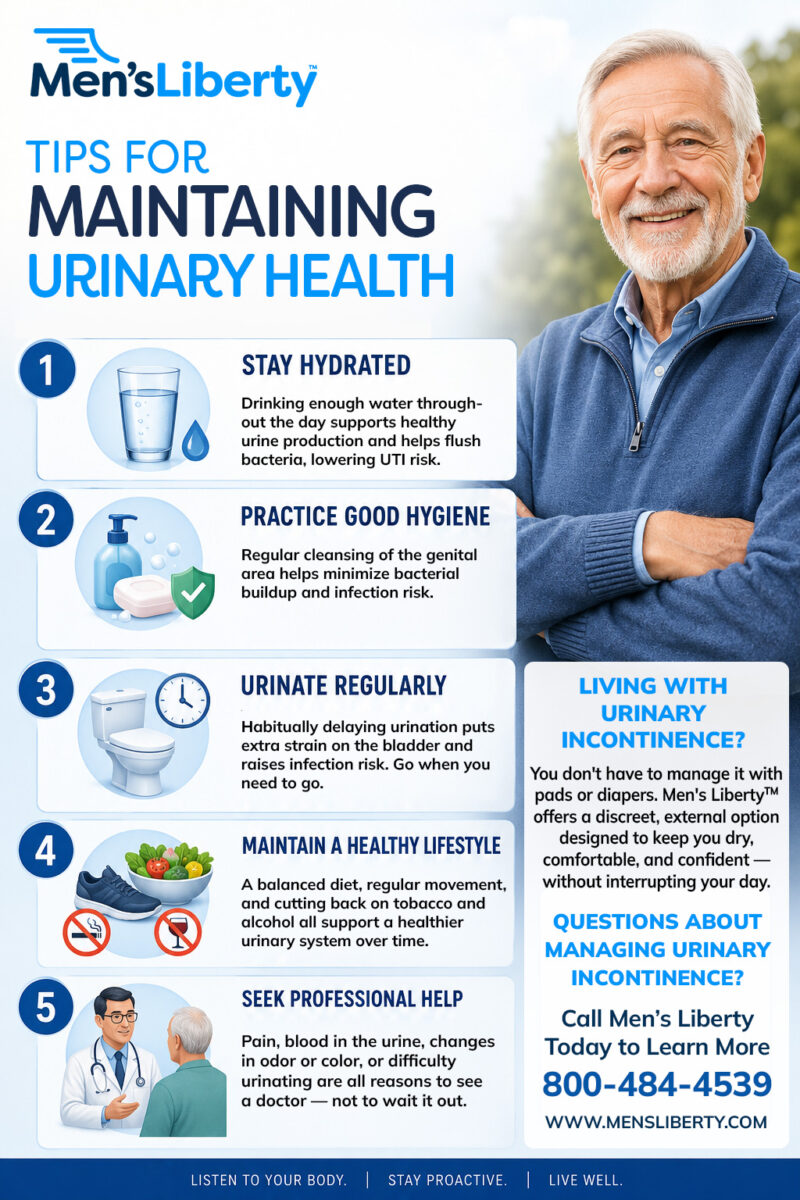
1. Stay Hydrated: Drinking an adequate amount of water helps maintain healthy urine production and dilutes the urine, reducing the risk of urinary tract infections.
2. Practice Good Hygiene: Proper hygiene, including washing the genital area regularly and keeping it clean and dry, can help prevent the spread of bacteria and reduce the likelihood of infections.
3. Urinate Regularly: Holding urine for extended periods can increase the risk of urinary tract infections and contribute to bladder or kidney problems. Make it a habit to empty your bladder when the urge arises.
4. Maintain a Healthy Lifestyle: A balanced diet, regular exercise, and avoiding tobacco and excessive alcohol consumption can contribute to overall urinary health and reduce the risk of urinary system complications.
5. Seek Professional Help: If you experience persistent urinary symptoms, such as pain, changes in urine color or odor, or difficulty urinating, it is crucial to consult a healthcare professional. They can provide a proper diagnosis, suggest appropriate treatments, and guide you in maintaining optimal urinary health.
This Men’s Health Month, urinary health deserves a seat at the table alongside heart health, mental health, and the rest of the conversation. Whether it’s a UTI, BPH, prostate cancer screening, or incontinence, awareness and early action make all the difference. Taking care of your urinary health today is an investment in a more comfortable, active, and confident tomorrow.
Living with urinary incontinence? You don’t have to manage it with pads or diapers. Men’s Liberty offers a discreet, external option designed to keep you dry, comfortable, and confident — without interrupting your day. Learn more about Men’s Liberty or talk to your healthcare provider about whether it’s right for you.
References
Urology Care Foundation. Urinary Incontinence
Centers for Disease Control and Prevention. Urinary Tract Infection
National Institute of Diabetes and Digestive and Kidney Diseases. Prostate Enlargement (BPH)
Mayo Clinic. Prostate Cancer